Advanced Surgery at Royan Institute Preserves Fertility in Two Young Girls with Cancer

Royan Institute has successfully preserved ovarian function and future fertility potential in two young girls diagnosed with cancer through an advanced fertility-preserving surgical procedure. Three years after treatment, both patients have undergone normal pubertal development and continue to demonstrate healthy ovarian function, marking a significant achievement in pediatric oncofertility.
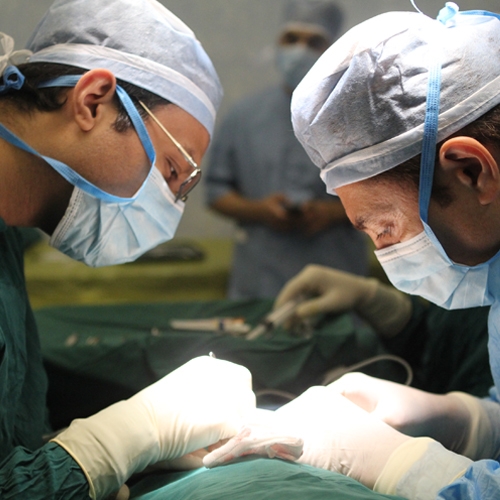
According to the Public Relations Office of Royan Institute, specialists at the Institute performed Laparoscopic Ovarian Transposition (LOT) prior to pelvic radiotherapy in two girls diagnosed with Ewing sarcoma. The procedure was carried out to protect the ovaries from radiation exposure before cancer treatment began. Three years later, the intervention has yielded highly encouraging outcomes, with both patients maintaining normal ovarian function and preserving their future reproductive potential.
Dr. Firouzeh Ghaffari, a gynecologist, obstetrician, and fellowship-trained infertility specialist at Royan Institute, explained that both patients were prepubertal at the time of their cancer diagnosis and were scheduled to undergo pelvic radiotherapy. Because pelvic irradiation can cause severe and irreversible ovarian damage, resulting in premature ovarian insufficiency and permanent infertility, the ovaries were laparoscopically repositioned outside the radiation field before treatment commenced.
"Now, three years after surgery, both girls have entered puberty spontaneously, experience regular menstrual cycles, and clinical assessments confirm that ovarian function has been successfully preserved," Dr. Ghaffari said. "Had this procedure not been performed, the likelihood of permanent ovarian failure and the loss of their future fertility would have been exceedingly high."
Emphasizing the importance of quality of life in cancer survivorship, Dr. Ghaffari noted that advances in oncology have significantly improved long-term survival rates. "As survival outcomes continue to improve, fertility preservation, particularly for children and adolescents, has become an integral component of modern cancer care. Today, our responsibility extends beyond treating the disease; we must also protect patients' future quality of life, including their opportunity to have biological children."
She further stressed that this successful experience highlights the importance of early multidisciplinary planning and close collaboration among oncology, surgical, and reproductive medicine teams. Such coordinated care makes it possible not only to treat the malignancy effectively but also to preserve patients' prospects for parenthood later in life.
This achievement exemplifies Royan Institute's advanced expertise in oncofertility and fertility preservation for patients undergoing cancer treatment. It also represents an important step forward in strengthening comprehensive supportive care for children and adolescents with malignant diseases, reaffirming the Institute's commitment to integrating reproductive health into modern oncology practice.